Intermodal across Canada.
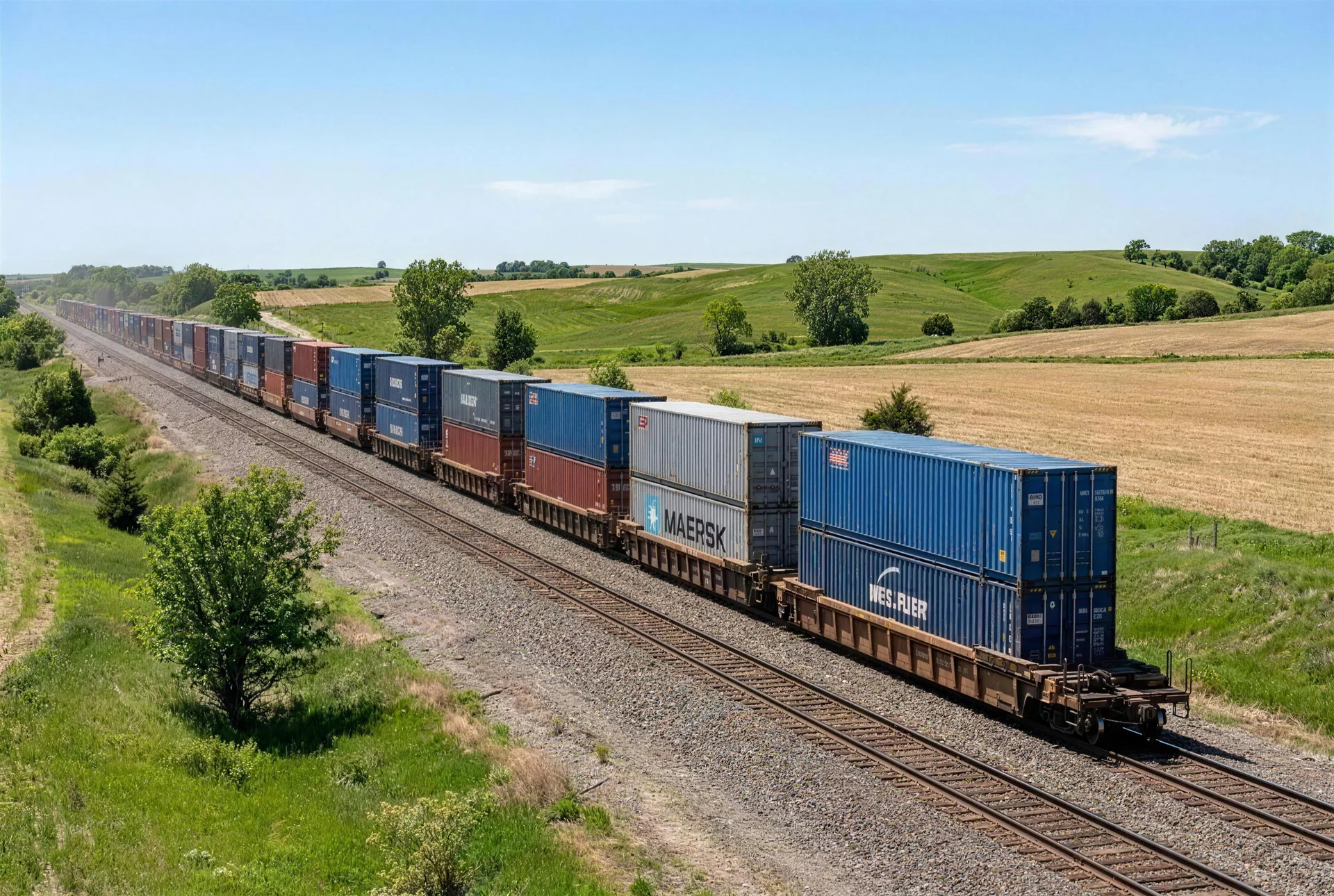
Your 53-foot container goes by truck to the rail terminal, by train for the long haul, and by truck to the receiver. Often the lower-cost alternative to a truckload on long Canadian lanes.
Explore the service details
Setara Logistics is a freight forwarder in Vaughan, Ontario that books domestic intermodal on CN and CPKC. Your freight is loaded into a 53-foot container, rides the train between rail terminals, and goes by truck between the terminal and each dock, without being unloaded on the way. One account manager plans the rail booking and both truck legs, and tells you plainly when a truckload is the better fit.
Long haul by train, trucked at both ends.
Intermodal means one container moving on more than one mode without the freight being handled in between. Inside Canada, that is the train for the long middle of the trip and a truck for the first and last mile. We plan the truck legs around the train’s cut-off and arrival times.
More about this service
Bringing a container in from overseas? The rail leg from the port to the GTA is part of the ocean booking, so it sits with our ocean freight service, door to door. Need only the truck move between a rail ramp and your dock? That is container drayage.
Where a shipment is too time-critical for the rail schedule, we will quote a full truckload instead and let you compare.
What intermodal includes.
The train leg, on CN or CPKC
Your 53-foot container rides the CN or CPKC intermodal network for the long haul between terminals. On long lanes it is usually cheaper than a truckload, when the schedule has room for the rail timing.
See all servicesA truck at both ends
We book the truck to the origin terminal and from the destination terminal, planned around the train’s schedule.
About container drayageFrom quote to proof of delivery.
01Quote and book
You send the origin, destination, ready date and what is moving. We look at the lane by train and by truck, tell you which fits, and book the rail.
02First mile
We book the pickup and the truck to the origin rail terminal, planned around the train’s cut-off.
03Rail line-haul
Your container moves on CN or CPKC for the long haul, with status from terminal to terminal.
04Delivery and POD
We book the truck from the destination terminal and confirm delivery with signed proof.
Intermodal FAQ.
What is domestic intermodal?
Domestic intermodal moves a full 53-foot container on a train for the long part of the trip and on a truck at each end, without unloading the freight in between. We book it on CN or CPKC and arrange both truck legs, so one account manager owns the move.
When does rail cost less than trucking?
Rail tends to win on long lanes, where distance makes a truckload expensive. On shorter or time-critical lanes, a full truckload is usually the better fit. Send us the lane and the timeline and we will tell you which suits it. Our guide explains when intermodal is cheaper than trucking, lane by lane.
Do you arrange the trucking to and from the rail terminal?
Yes. We arrange the truck at both ends, planned around the train’s schedule, with carriers equipped for 53-foot domestic containers. One account manager owns the move from pickup to delivery.
Is rail a lower-emission option?
Rail generally produces lower emissions than a truck over the same long lane. We will flag where rail fits your schedule so you can weigh cost, timing and emissions against a truckload.
What about containers coming in from overseas?
An import container usually reaches the GTA by train from the port as part of the ocean booking, then goes by truck to your door. That is arranged under our ocean freight service, with customs through a licensed customs broker partner.
Related services and guides.
Moving freight across Canada?
Send us the lane and what is moving. We will look at it by train and by truck and tell you which mode fits.
Request a quote Talk to a logistics specialist